

Quarterly Review of the Caucasus Economy (First Quarter, 2026)
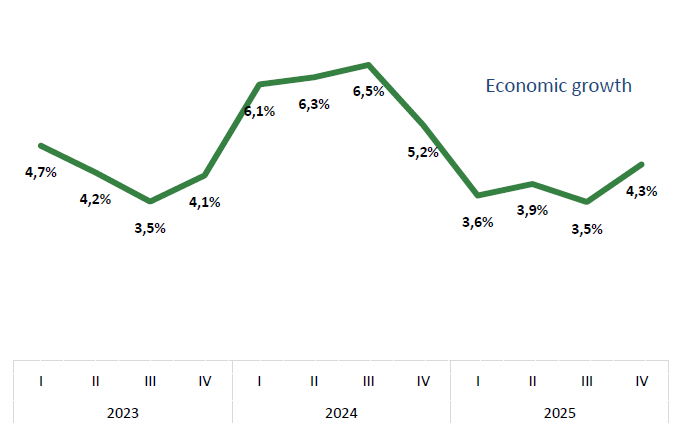
The strong post-pandemic growth momentum in the South Caucasus has moderated. In the first quarter of 2026, the region’s economy expanded by 3.4% yearon-year. By comparison, economic growth stood at 3.6% in the first quarter of 2025. The slowdown in regional economic expansion is largely attributable to weaker growth in Azerbaijan, which accounts for more than half of the South Caucasus economy. The deterioration in Azerbaijan’s economic performance is primarily driven by a decline in oil production, which accounts for approximately one-third of the country’s economy.
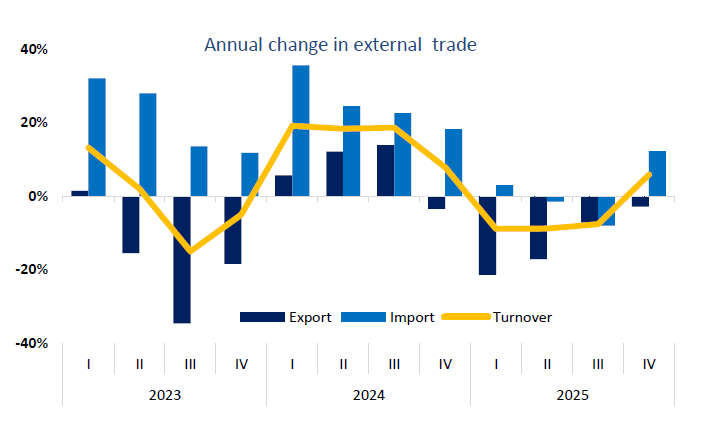
External trade remains a key driver of growth. The region’s economies are relatively open, which underscores the significant role of foreign trade in economic development. In the first quarter of 2026, total trade turnover in the South Caucasus amounted to USD 20,849.1 million, representing a 6.6% year-onyear decline. Against this backdrop, trade dynamics weakened at the beginning of the year. During this period, export performance showed positive momentum. In Q1 2026, export values increased by 2.7% compared to the previous year. However, imports declined by 13.4%, reflecting a contraction in export revenues from Azerbaijan, largely linked to developments in the oil industry.
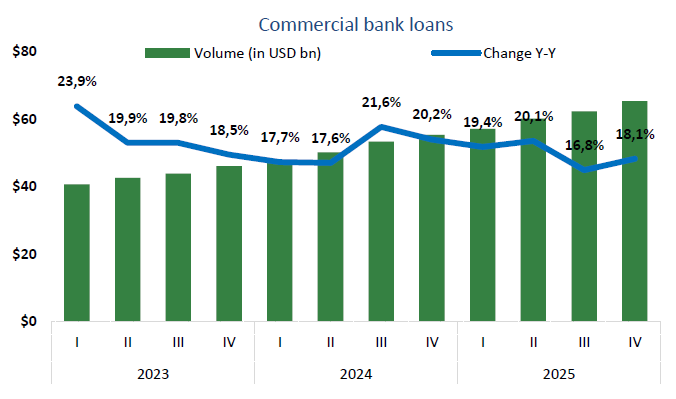
Bank lending continues to represent an important source of financing for household consumption and investment in the South Caucasus, particularly in Georgia. By the end of the first quarter of 2026, total outstanding loans issued by commercial banks in the region reached USD 68,134.2 million, reflecting a 17.9% year-on-year increase. However, the pace of credit growth has moderated, as this figure stood at 19.4% in the fourth quarter of the previous year.
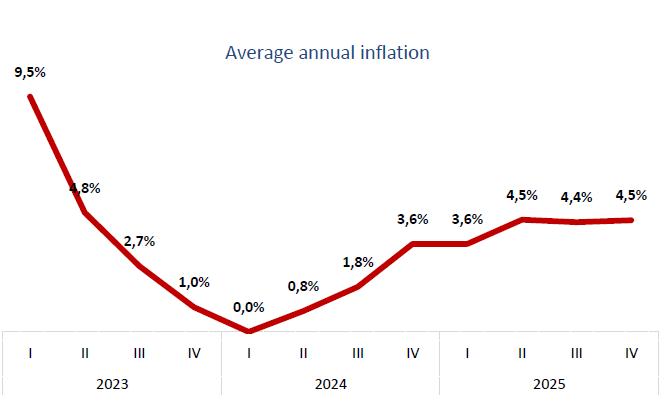
Inflation remained a key challenge for regional central banks, as consumer price growth in the first quarter of 2026 generally exceeded target levels. In terms of price dynamics, conditions were relatively more stable in Armenia, while the highest inflationary pressures were recorded in Azerbaijan. The average annual inflation rate in the South Caucasus stood at 4.8% in Q1 2026, indicating an acceleration compared to previous periods. Nevertheless, monetary policy rates across central banks remained broadly unchanged.
See the attached file for the entire document.
Gallery